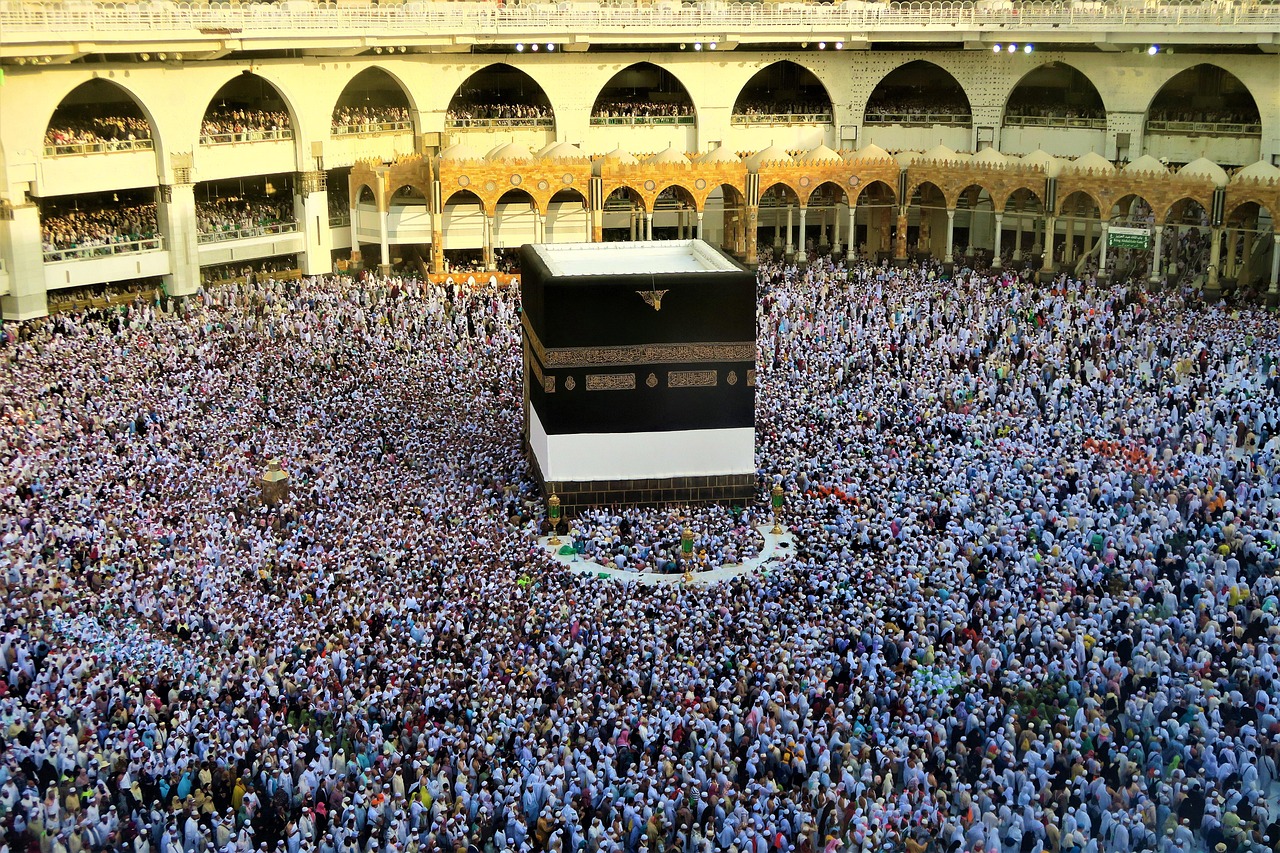
For thousands of years, ancient civilizations have constructed monuments, temples, and sacred sites that seem to align with invisible threads connecting Earth’s most powerful locations. These mysterious pathways, known as ley lines, have fascinated researchers, mystics, and archaeologists alike.

The concept of ley lines represents more than mere coincidence or primitive surveying techniques. These alleged energy corridors form a complex web across our planet, connecting ancient sites in patterns that defy simple explanation. From Stonehenge to the Great Pyramids, from Easter Island to Machu Picchu, these sacred networks challenge our understanding of ancient knowledge and Earth’s hidden geography.
🗺️ The Origins of Ley Line Theory
The term “ley lines” was first coined by British antiquarian Alfred Watkins in 1921. While photographing the Herefordshire countryside, Watkins experienced a sudden revelation: ancient sites across the British landscape appeared to align in perfectly straight lines. He noticed that prehistoric monuments, burial mounds, standing stones, and even medieval churches seemed to follow these invisible corridors.
Watkins initially believed these lines represented ancient trade routes or pathways used by prehistoric travelers. He suggested that our ancestors created these alignments for practical navigation purposes, using prominent landmarks as waypoints across difficult terrain. His groundbreaking book “The Old Straight Track” presented extensive photographic and cartographic evidence supporting his observations.
However, subsequent researchers expanded Watkins’ original theory far beyond simple navigation routes. They proposed that ley lines represented channels of Earth’s electromagnetic energy, spiritual pathways, or even connections to cosmic forces. This evolution transformed ley lines from historical curiosities into mystical phenomena attracting worldwide attention.
Sacred Geometry and Ancient Alignments
Ancient civilizations demonstrated remarkable sophistication in their understanding of geometry, astronomy, and landscape positioning. The precision with which they aligned their structures suggests knowledge far more advanced than conventional archaeology typically acknowledges. These alignments often incorporate mathematical relationships, astronomical observations, and geographical relationships that seem too consistent to be accidental.
Mathematical Precision in Ancient Construction
The Great Pyramid of Giza sits almost exactly on the 30th parallel north latitude. Its base perimeter, when divided by twice its height, yields a close approximation of pi. The diagonal of the pyramid points precisely toward the star Alcyone in the Pleiades constellation. These mathematical relationships extend beyond Egypt to sites worldwide.
Stonehenge aligns with the summer solstice sunrise and winter solstice sunset. The monument’s geometry incorporates sophisticated lunar cycles, suggesting its builders possessed advanced astronomical knowledge. Similar alignments appear at Newgrange in Ireland, where sunlight penetrates the inner chamber only during the winter solstice sunrise.
Global Patterns of Sacred Sites
Researchers have identified several major ley lines that traverse multiple continents, connecting numerous sacred sites. The most famous is the “St. Michael Line” running across southern England, connecting dozens of ancient churches, stone circles, and earthworks dedicated to St. Michael or pre-Christian dragon deities.
Another proposed alignment connects the Great Pyramid with Stonehenge and the Easter Island moai statues. When plotted on a globe, these sites form portions of a great circle, suggesting intentional positioning relative to Earth’s geometry. Whether these alignments represent ancient surveying achievements or modern pattern recognition remains hotly debated.
⚡ Earth Energy and Electromagnetic Phenomena
Modern ley line enthusiasts often emphasize the energetic properties of these alignments. They propose that ley lines represent channels of terrestrial energy, similar to acupuncture meridians in the human body. This theory suggests ancient peoples possessed sensitivity to these energy flows and positioned their sacred sites accordingly.
Some researchers have documented unusual electromagnetic readings, gravitational anomalies, and increased ionization at locations along proposed ley lines. Underground water streams, geological fault lines, and mineral deposits often coincide with these sacred sites, potentially explaining anomalous energy readings.
Dowsing and Energy Detection
Dowsers claim to detect energy flows at sacred sites using rods, pendulums, or simple bodily sensitivity. While mainstream science dismisses dowsing as pseudoscience, practitioners report consistent results when mapping energy patterns at ancient monuments. These detected patterns often correlate with architectural features, suggesting builders intentionally incorporated energy considerations into their designs.
Churches built on former pagan sites frequently exhibit unusual electromagnetic properties. The crypt of Chartres Cathedral, for instance, sits atop a natural underground spring considered sacred since pre-Christian times. The cathedral’s labyrinth reportedly generates measurable energy patterns during certain lunar phases.
Mythological Landscapes and Dragon Lines
Many cultures describe invisible pathways crossing the land, often associated with serpent or dragon symbolism. Chinese feng shui tradition recognizes “dragon lines” carrying chi energy across the landscape. These dragon veins influence prosperity, health, and spiritual wellbeing, requiring careful consideration when positioning buildings.
Australian Aboriginal cultures describe “songlines” crisscrossing the continent. These sacred pathways record creation stories in the landscape itself, connecting significant sites through mythological narratives. Walking these songlines and singing the associated songs serves as both navigation and spiritual practice.
European Dragon Legends and Sacred Pathways
European folklore frequently associates ley lines with dragons, serpents, or underground forces. St. Michael churches often sit on elevated hilltops, supposedly marking points where the saint conquered dragons. These “dragon-slaying” stories may preserve ancient memories of energy manipulation or the Christianization of pagan sacred sites.
The Serpent Mound in Ohio represents the largest surviving effigy mound in North America. This quarter-mile-long earthwork depicts a serpent swallowing an egg, aligning with astronomical events and potentially marking energy flows. Similar serpent mounds appear worldwide, suggesting universal recognition of snake symbolism in sacred geography.
🌍 Famous Ley Line Networks Around the World
While ley line theories remain controversial, certain alignments have attracted particular attention due to their apparent precision and the significance of connected sites.
The St. Michael Line
This alignment crosses southern England from Cornwall to Norfolk, connecting St. Michael’s Mount, Glastonbury Tor, Avebury, and numerous other sacred sites. The line aligns with the May Day sunrise, suggesting deliberate astronomical orientation. Churches dedicated to St. Michael or St. George (both dragon-slayers) dot this pathway with remarkable frequency.
The Great Circles
Several researchers propose that major monuments worldwide align along great circles—the shortest paths between two points on a sphere. One proposed great circle connects:
- The Great Pyramid of Giza
- Petra in Jordan
- Persepolis in Iran
- Mohenjo-daro in Pakistan
- The temple at Angkor Wat in Cambodia
This alignment, passing through locations separated by thousands of miles and multiple cultures, suggests either remarkable coincidence or ancient global communication far beyond conventional historical understanding.
The Nazca Lines Connection
The famous Nazca Lines in Peru extend beyond the familiar geoglyphs. Some researchers claim these lines connect with sacred sites throughout South America, forming a continental network of sacred pathways. The lines’ purpose remains mysterious, with theories ranging from astronomical calendars to ritual pathways to water finding systems.
Scientific Skepticism and Alternative Explanations
Mainstream archaeology and geology generally dismiss ley line theories as pseudoscience based on selective data interpretation, confirmation bias, and statistical inevitability. Critics argue that with thousands of ancient sites worldwide, some alignments must occur by pure chance.
Skeptics point out that many proposed ley lines work only when using selective site inclusion, ignoring inconvenient data points, or allowing significant margins of error. The “straight track” theory struggles when confronted with Earth’s curvature, which ancient peoples supposedly couldn’t account for when creating thousand-mile alignments.
The Problem of Chronology
A significant challenge for ley line theories involves timing. Sites along proposed alignments often span thousands of years of construction, involving cultures with no apparent contact. Why would medieval church builders continue alignments established by Neolithic peoples millennia earlier, especially if they lacked knowledge of the original system?
Additionally, many churches sit on former pagan sites simply because Christianity deliberately built on pre-existing sacred locations to ease conversion. This practical explanation requires no ley line theories to account for apparent alignments between pagan and Christian monuments.
🔮 Modern Applications and New Age Perspectives
Despite scientific skepticism, ley line concepts remain popular in New Age spirituality, earth mysteries research, and alternative archaeology. Many practitioners use ley line maps for meditation sites, energy work, and spiritual pilgrimage destinations.
Some alternative health practitioners propose that living near ley line intersections influences human health, either positively or negatively depending on the energy quality. They recommend positioning beds, meditation spaces, and healing centers according to detected energy flows.
Contemporary Ley Line Mapping
Modern enthusiasts use GPS technology, satellite imagery, and sophisticated mapping software to identify potential alignments invisible to earlier researchers. These tools reveal patterns across vast distances, though critics argue they also enable more sophisticated forms of pattern-seeking in random data.
Crowdsourced mapping projects invite public participation in identifying and documenting potential ley lines. While these efforts generate extensive data, they also risk confirmation bias, as participants tend to report findings supporting their expectations rather than challenging them.
The Psychology of Sacred Spaces
Regardless of objective energy measurements, sacred sites undeniably affect human consciousness. Pilgrims report profound experiences at these locations, experiencing emotional resonance, spiritual insight, or physical sensations. Whether these effects derive from Earth energies, psychological factors, or both remains open to interpretation.
The human tendency to find patterns, even in random data, is well-documented. Our brains evolved to detect significant patterns in our environment, sometimes perceiving connections where none objectively exist. This cognitive bias might explain both the creation and perception of ley line networks.
The Power of Belief and Place
Sacred sites accumulate centuries of human devotion, ritual, and spiritual focus. This concentrated attention may indeed create measurable effects, whether through electromagnetic signatures from human activity or through the psychological power of expectation and tradition.
The concept of “thin places”—locations where the boundary between physical and spiritual realms grows permeable—appears in cultures worldwide. These locations often coincide with proposed ley line intersections, suggesting universal human sensitivity to certain landscape features, regardless of whether measurable earth energies exist.
⛰️ Practical Exploration of Sacred Alignments
For those interested in personally experiencing ley line phenomena, visiting aligned sacred sites offers direct engagement with these mysteries. Many locations welcome visitors and provide opportunities for meditation, contemplation, or simple appreciation of ancient accomplishments.
When visiting sacred sites, observe your personal responses. Notice any unusual sensations, emotional reactions, or heightened awareness. Keep a journal documenting experiences at different locations. Whether these responses indicate sensitivity to earth energies or simply the power of historically resonant spaces, they provide valuable personal insights.
Responsible Sacred Site Visitation
Ancient monuments face increasing threats from tourism, erosion, and vandalism. Visitors should respect these irreplaceable cultural treasures by following site rules, avoiding physical contact with ancient structures, and leaving no trace of their presence. Sacred sites belong to all humanity and must be preserved for future generations.
Many sites remain spiritually significant to local communities. Approach these locations with cultural sensitivity, respecting ongoing religious practices and traditional access restrictions. What appears as archaeological curiosity to outsiders often represents living spiritual tradition to local peoples.

The Continuing Mystery of Earth’s Sacred Networks
The ley line debate ultimately concerns how we understand our ancestors’ capabilities, knowledge, and relationship with their environment. Did ancient peoples possess wisdom about Earth’s energetic properties that modern science overlooks? Or do ley lines represent sophisticated mythmaking, projecting modern desires for ancient wisdom onto ambiguous archaeological data?
Perhaps the truth encompasses elements of both perspectives. Ancient peoples undoubtedly possessed keen environmental awareness, astronomical knowledge, and surveying skills that produced remarkable constructions. Whether this awareness extended to detecting subtle earth energies remains unproven but not impossible.
The ley line phenomenon reminds us that mystery still permeates our world despite technological advancement. These enigmatic alignments, whether objective reality or compelling mythology, continue inspiring curiosity about our planet’s hidden dimensions and humanity’s ancient past. They invite us to look beyond surface appearances, question established narratives, and remain open to possibilities that conventional science might overlook.
Whether exploring these sacred networks reveals genuine earth mysteries or simply reflects humanity’s eternal search for meaning in landscape, the journey itself offers value. By engaging with ley lines and sacred alignments, we connect with ancient perspectives, question our assumptions, and potentially discover that Earth holds more secrets than our current understanding acknowledges. The mysteries remain, waiting for new generations to explore, interpret, and perhaps someday fully understand. 🌟