Throughout human history, the ability to track and predict time has been far more than a mere convenience. It has been a source of profound power, shaping the rhythms of civilizations and determining who holds authority over communities.

The mastery of calendrical systems transformed humanity from reactive survivors into proactive planners. This knowledge created a framework through which societies could organize religious ceremonies, optimize agricultural production, and establish political hierarchies that would endure for millennia.
🌅 The Dawn of Timekeeping: Why Calendars Became Essential
Early human societies quickly recognized patterns in nature—the changing seasons, lunar phases, and stellar movements. These observations weren’t merely academic curiosities; they were matters of survival. Understanding when floods would come, when to plant crops, or when game animals would migrate meant the difference between prosperity and starvation.
The first calendrical systems emerged independently across various civilizations, from Mesopotamia to Mesoamerica. Each culture developed unique methods to track celestial movements and seasonal changes. The Babylonians created lunar calendars, the Egyptians developed a solar system based on the Nile’s flooding patterns, and the Maya constructed an extraordinarily precise astronomical calendar that rivals modern calculations.
These early timekeeping systems weren’t simply tools for daily organization. They represented humanity’s first systematic attempt to understand and predict natural phenomena, transforming chaotic observations into structured knowledge that could be transmitted across generations.
⛪ Sacred Cycles: How Calendars Shaped Religious Authority
Religious institutions quickly recognized the power inherent in controlling calendrical knowledge. Priests and religious leaders who could predict solar eclipses, seasonal changes, or optimal planting times appeared to possess divine knowledge—a perception they actively cultivated and protected.
The Priesthood as Timekeepers
In ancient Egypt, priests meticulously observed the heliacal rising of Sirius, which coincided with the Nile’s annual flooding. This knowledge allowed them to predict when the life-giving waters would arrive, positioning the priesthood as essential intermediaries between gods and mortals. Their ability to forecast this crucial event reinforced religious authority and justified their elevated social status.
Similarly, Mayan priests developed complex calendrical systems including the Tzolk’in (260-day sacred calendar) and the Haab’ (365-day solar calendar). These intertwining cycles created the Calendar Round, which repeated every 52 years. The priests’ exclusive understanding of these systems made them indispensable for determining auspicious days for warfare, marriage, planting, and religious ceremonies.
Ritual Timing and Cosmic Order
Calendars didn’t merely track time—they sanctified it. Specific days became holy, others inauspicious. This temporal categorization gave religious authorities tremendous power over daily life. People couldn’t conduct important activities without consulting those who understood the sacred calendar.
The ancient Romans provide a fascinating example. Their calendar was originally maintained by pontiffs who could manipulate time itself by adding or removing days. This power allowed them to extend the terms of friendly magistrates or shorten those of rivals, demonstrating how calendrical control translated directly into political influence.
🌾 Agricultural Revolution: From Observation to Optimization
While religious applications of calendars captured imaginations, agricultural applications transformed economies. The transition from hunter-gatherer societies to agricultural civilizations required precise timing—planting too early meant frost would kill seedlings, too late meant insufficient growing time before harvest.
The Farming Calendar as Survival Tool
Early agricultural societies developed detailed calendrical systems tied to farming cycles. The ancient Chinese agricultural calendar divided the year into 24 solar terms, each marking specific agricultural activities. These included “Beginning of Spring,” “Awakening of Insects,” “Grain Rain,” and “White Dew”—poetic names that conveyed precise meteorological and agricultural information.
This knowledge accumulation represented centuries of observation and experimentation. Farmers learned not only when to plant specific crops but also when to irrigate, fertilize, prune, and harvest. This calendrical wisdom became the foundation of food security and economic prosperity.
Surplus, Specialization, and Civilization
Accurate agricultural calendars enabled consistent crop surpluses, which fundamentally altered human societies. With reliable food production, not everyone needed to farm. Specialists emerged—craftspeople, soldiers, administrators, and scholars—whose existence depended on farmers producing more than their families consumed.
This specialization accelerated technological innovation and cultural development. Complex civilizations with monumental architecture, sophisticated art, and advanced mathematics became possible only because calendrical knowledge optimized agriculture to the point where it could support non-farming populations.
👑 Political Power Through Temporal Control
Political leaders throughout history recognized that controlling the calendar meant controlling society itself. The power to define when religious festivals occurred, when taxes were due, when military campaigns should begin, and even what year it was gave rulers extraordinary authority.
Calendar Reform as Political Statement
Julius Caesar’s calendar reform in 46 BCE exemplifies how calendrical control reinforced political power. The previous Roman calendar had become chaotic through priestly manipulation and required regular intercalation that was often politicized. Caesar’s Julian calendar, developed with the Egyptian astronomer Sosigenes, created a regular 365-day year with a leap day every four years.
This reform did more than fix timekeeping—it centralized power in the emperor’s hands. Caesar personally decreed the new system, positioning himself as master of time itself. The calendar bore his name, and the month of July (Julius) became a permanent monument to his authority.
Competing Calendars, Competing Powers
Throughout history, rival calendrical systems often represented competing political or religious authorities. The persistence of different calendar systems—Gregorian, Julian, Islamic, Hebrew, Hindu, Chinese—reflects not just cultural diversity but historical power struggles.
When Pope Gregory XIII reformed the Julian calendar in 1582, creating the Gregorian calendar used internationally today, its adoption became a political statement. Protestant countries initially refused to accept a calendar mandated by the Pope, continuing with the increasingly inaccurate Julian system for decades or even centuries. Britain and its colonies didn’t adopt the Gregorian calendar until 1752, while Russia waited until 1918.
📊 The Mechanics of Calendrical Systems
Understanding how different civilizations approached timekeeping reveals the remarkable ingenuity humans applied to this fundamental challenge. Various systems emerged based on different astronomical observations and cultural priorities.
Solar, Lunar, and Lunisolar Systems
Solar calendars like the Egyptian and Julian systems based their structure on the Earth’s revolution around the Sun, creating years of approximately 365 days. These calendars aligned well with seasonal changes, making them particularly useful for agriculture.
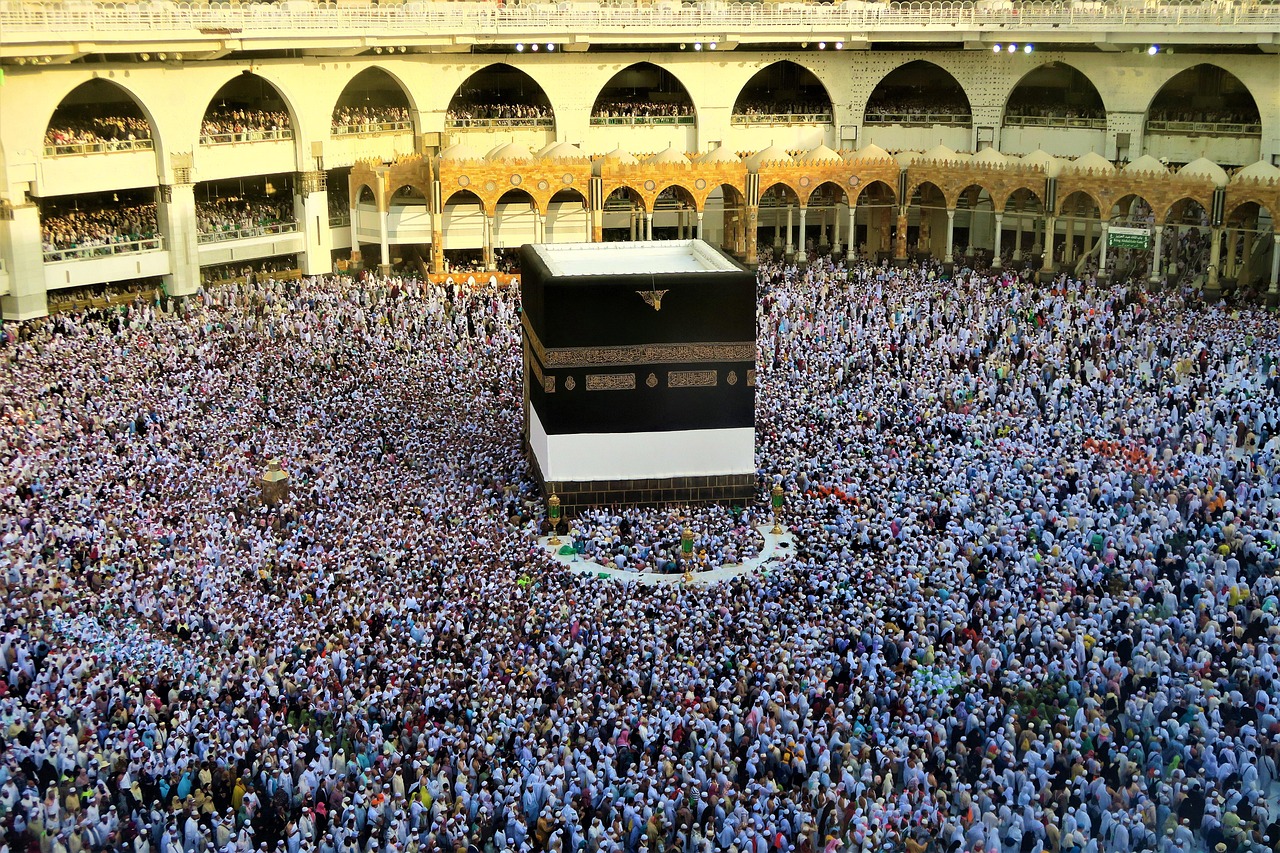
Lunar calendars, such as the Islamic Hijri calendar, followed the Moon’s phases through cycles of approximately 29.5 days. Twelve lunar months total about 354 days, causing lunar calendar years to drift relative to seasons—the Islamic holy month of Ramadan gradually moves through all seasons over a 33-year cycle.
Lunisolar calendars, including the Hebrew and traditional Chinese systems, attempted to synchronize both lunar months and solar years through complex intercalation schemes. These systems added periodic extra months to realign lunar cycles with solar seasons, combining the advantages of both approaches while introducing mathematical complexity.
Calculating Time Across Cultures
Different civilizations developed varying levels of calendrical precision based on their astronomical observations and mathematical capabilities:
- Egyptian Solar Calendar: 365 days with no leap year adjustment, gradually drifting against actual solar year
- Julian Calendar: 365.25-day average year (365 days plus one leap day every four years)
- Gregorian Calendar: 365.2425-day average year (refining Julian system by omitting leap years in most century years)
- Maya Long Count: Vigesimal system tracking days from mythological creation date with extraordinary precision
- Chinese Calendar: Lunisolar system with complex intercalation rules maintaining seasonal alignment
⚖️ Justice, Commerce, and Calendrical Standardization
As societies became more complex and interconnected, standardized timekeeping became essential for commerce, law, and administration. The question of when contracts expired, when debts came due, or when legal proceedings should occur required agreed-upon temporal frameworks.
Economic Implications of Time
Merchants operating across regions with different calendrical systems faced significant challenges. A contract signed in one calendar system might have different implications when interpreted through another. This complexity created opportunities for manipulation but also drove demand for standardization.
Interest calculations, lease agreements, employment contracts, and trade obligations all depended on precise time measurement. Societies with more accurate, widely adopted calendrical systems gained economic advantages through reduced transaction costs and enhanced predictability.
Legal Time and Authority
Legal systems required authoritative determination of dates and time periods. Statutes of limitations, age of majority, contract terms, and criminal sentences all depended on accurate timekeeping. The authority to officially declare the calendar—to say definitively what day, month, and year it was—represented fundamental sovereign power.
This power extended to determining how time was measured. The adoption of standardized time zones in the late 19th century, driven by railroad scheduling needs, demonstrates how technological and economic requirements continued reshaping temporal organization even in the modern era.
🔄 Calendar Reform Movements Through History
Dissatisfaction with existing calendrical systems has periodically sparked reform movements. These efforts reveal ongoing tensions between astronomical accuracy, religious tradition, economic convenience, and political authority.
The French Revolutionary Calendar
Perhaps the most radical calendar reform attempt occurred during the French Revolution. In 1793, the revolutionary government abolished the Gregorian calendar, replacing it with a decimal-based system featuring 12 months of 30 days each, with five or six complementary days completing the year.
This calendar deliberately broke from Christian tradition, starting Year I from the foundation of the Republic and renaming months with nature-inspired names like Thermidor (month of heat) and Brumaire (month of fog). The reform even restructured weeks into 10-day décades, eliminating Sunday as a day of rest.
Despite its mathematical elegance, the Revolutionary calendar lasted only 12 years. Napoleon abolished it in 1805, recognizing that calendrical radicalism created practical difficulties and isolated France internationally. This failure demonstrated that successful calendars require more than logical design—they need cultural acceptance and practical utility.
🌍 Modern Timekeeping: Globalization and Digital Precision
Today’s globally interconnected world relies on precise, standardized timekeeping to an unprecedented degree. International commerce, digital communications, satellite navigation, and financial markets all depend on synchronized time measurements accurate to fractions of seconds.
Coordinated Universal Time (UTC), maintained by atomic clocks, provides the global time standard. Yet traditional calendrical systems persist for cultural and religious purposes, creating a layered temporal landscape where multiple systems coexist. Someone might schedule an international business meeting in UTC, celebrate religious holidays according to a traditional calendar, and organize agricultural activities by local seasonal indicators.
This pluralistic approach to time represents a departure from historical patterns where single calendrical systems dominated within their spheres of influence. Modern technology has enabled calendar conversion and coordination across systems, reducing the political significance of calendrical control while preserving cultural diversity in temporal reckoning.

🎯 The Lasting Legacy of Calendrical Mastery
The human journey toward mastering time reveals fundamental truths about civilization itself. Calendars emerged from practical necessity—predicting floods and optimal planting times—but quickly became instruments of religious authority and political power. Those who controlled calendrical knowledge could claim divine favor, organize collective action, and legitimize their authority over others.
Agricultural societies particularly benefited from precise timekeeping, transforming subsistence farming into surplus-producing systems that enabled specialization, urbanization, and cultural flourishing. The connection between calendrical knowledge and agricultural success created feedback loops where better timekeeping enabled larger populations, which in turn supported more sophisticated astronomical observations and mathematical calculations.
Political leaders recognized that controlling the calendar meant shaping daily life for entire populations. Through calendar reforms, rulers demonstrated power, legitimized regimes, and sometimes attempted to remake society itself. The success or failure of these reforms depended not just on astronomical accuracy but on cultural acceptance and practical utility.
Today’s world still bears the imprint of ancient calendrical systems. The seven-day week, the 12-month year, the timing of religious holidays, and even the structure of our working lives reflect decisions made thousands of years ago by cultures attempting to impose order on time’s relentless flow.
Understanding this history illuminates how seemingly neutral technical systems—methods for measuring and organizing time—actually embody cultural values, religious beliefs, and power relationships. The calendar on your wall or phone represents millennia of human ingenuity, political struggle, and cultural evolution. It reflects not just astronomical reality but also the accumulated decisions of countless societies working to master time itself.
As we move further into an era of digital precision and global interconnection, the fundamental human need to organize time meaningfully persists. Whether through traditional calendars marking religious observances or sophisticated atomic clocks coordinating global systems, we continue the ancient project of transforming time from an abstract flow into a structured resource we can understand, predict, and control—just as our ancestors did when they first noticed patterns in the stars and seasons, and realized that knowledge of time was, truly, power.