Throughout human history, the act of declaring land sacred has served as one of the most powerful tools for establishing collective identity and social control. When territories become imbued with religious or spiritual significance, they transform from mere geographical spaces into embodiments of faith, nationalism, and power.

The phenomenon of territorial sanctification—the process by which specific lands are designated as holy, blessed, or spiritually significant—creates profound ripples across societies. It shapes how communities understand themselves, whom they consider allies or enemies, and how power structures maintain legitimacy. From ancient temple complexes to modern nation-states claiming divine mandates, the mapping of belief onto physical terrain continues to influence global politics, cultural preservation, and social cohesion in ways both visible and subtle.
🗺️ The Foundations of Sacred Geography
The concept of sacred land predates written history, emerging from humanity’s earliest attempts to understand the relationship between the physical world and the transcendent. Archaeological evidence reveals that Paleolithic peoples already designated certain caves, mountains, and water sources as spiritually significant, creating the first templates for what would become complex systems of territorial sanctification.
Sacred geography operates on the principle that divine presence or spiritual energy concentrates in specific locations. This belief transforms ordinary landscapes into charged environments where the boundaries between the material and spiritual worlds supposedly thin. Mount Sinai in the Abrahamic traditions, Mount Kailash in Hinduism and Buddhism, and Uluru for Aboriginal Australians exemplify how natural features become repositories of collective meaning.
What makes territorial sanctification particularly powerful is its dual nature: it operates simultaneously as genuine religious experience for believers and as a social technology for organizing communities. A mountain becomes more than rock and earth; it becomes a shared reference point that unites people across generations, creating continuity between past, present, and future.
The Psychology Behind Sacred Spaces
Human cognition naturally seeks to anchor abstract beliefs in concrete reality. Territorial sanctification satisfies this psychological need by providing tangible locations where faith can be experienced physically. Pilgrimage sites, temples, and holy cities offer believers direct engagement with their spiritual narratives, transforming doctrine into lived experience.
Neurological studies suggest that sacred spaces activate particular brain regions associated with both spatial memory and emotional processing. This neurological response helps explain why territorial sanctification proves so resilient across cultures—it leverages fundamental aspects of human cognition to create powerful associations between place and meaning.
⚔️ Unity Through Shared Sacred Space
The designation of sacred territory serves as a centripetal force, drawing dispersed populations toward common identity and purpose. When communities share reverence for the same geographical locations, they establish a foundation for collective action that transcends individual differences.
Jerusalem provides perhaps the most complex example of this phenomenon. As a city sacred to Judaism, Christianity, and Islam, it demonstrates both the unifying power of territorial sanctification within each faith community and the potential for conflict when multiple groups claim the same space. For Jews, Jerusalem represents the historical center of their ancient kingdom and the site of the Temple. For Christians, it’s where Jesus was crucified and resurrected. For Muslims, it’s where Muhammad ascended to heaven. Each tradition’s territorial sanctification creates internal cohesion while simultaneously generating inter-group tension.
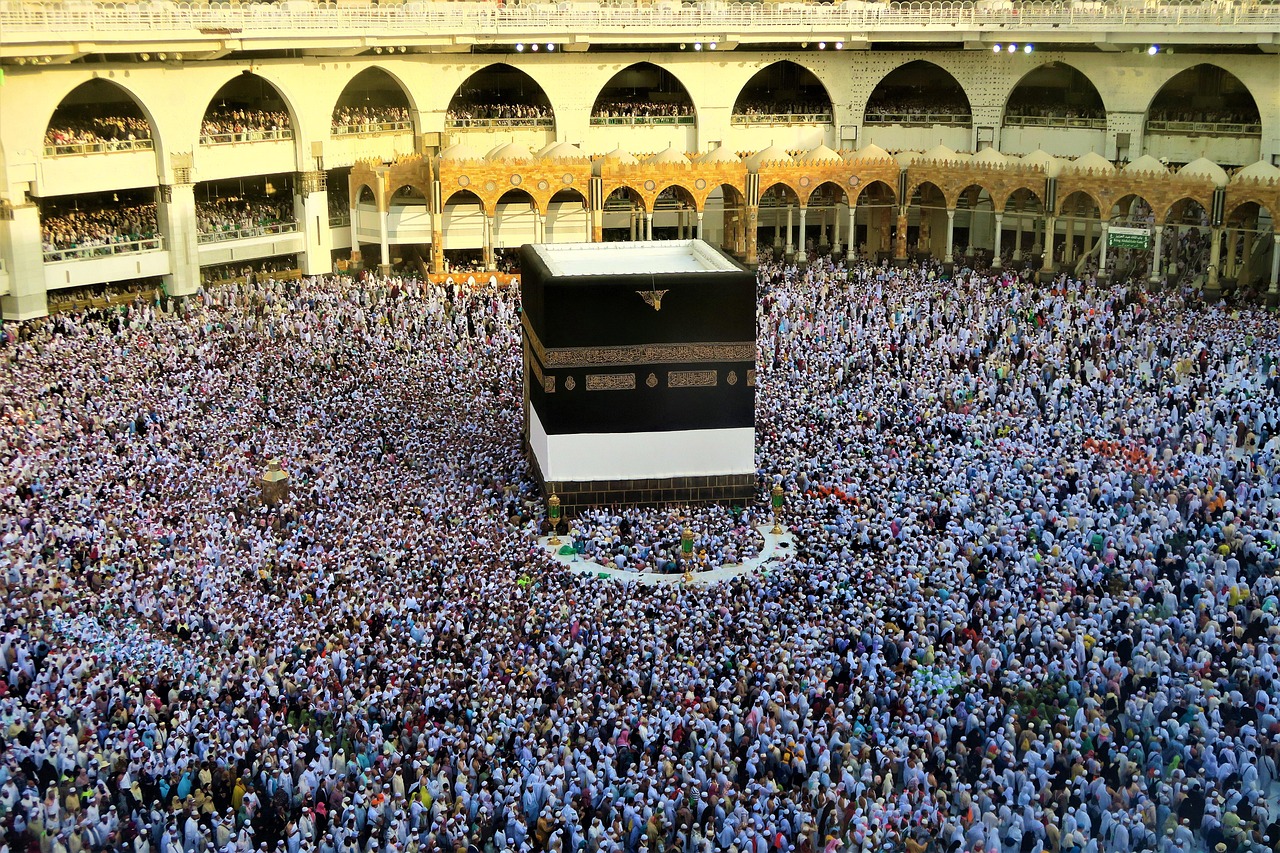
The unifying power of sacred territory becomes particularly evident during pilgrimages. The Hajj to Mecca brings millions of Muslims together annually, creating temporary communities that transcend national, ethnic, and linguistic boundaries. Similarly, the Kumbh Mela in India gathers Hindus by the tens of millions, creating the world’s largest peaceful gathering. These events demonstrate how territorial sanctification can dissolve social barriers, at least temporarily, by focusing attention on shared sacred space.
Nation-Building Through Sacred Landscape
Modern nation-states frequently employ territorial sanctification as a nation-building strategy, even in ostensibly secular contexts. National monuments, memorial sites, and capital cities often acquire quasi-sacred status, serving similar social functions as religious holy places.
The United States provides instructive examples: Arlington National Cemetery, the Lincoln Memorial, and Ground Zero in New York City function as secular sacred spaces that unite citizens through shared reverence. These locations become pilgrimage sites where national identity is reinforced through ritualized visits and ceremonial observances.
👑 Power Legitimation Through Sacred Territory
The control and administration of sacred territory has consistently served as a primary mechanism for legitimating political power. Rulers throughout history have understood that whoever controls holy sites controls a significant source of social authority.
In ancient civilizations, kings and emperors routinely positioned themselves as intermediaries between divine forces and common people. The Pharaohs of Egypt derived legitimacy from their role as maintainers of ma’at (cosmic order) and builders of sacred temples. Chinese emperors claimed the Mandate of Heaven, with their capital cities designed according to sacred geometry that reflected cosmic order. Medieval European monarchs asserted divine right, with coronations conducted in sacred cathedrals to sanctify political authority through religious ritual.
This pattern continues in contemporary contexts. Theocratic states like Iran and Vatican City base their entire governmental structure on religious authority tied to sacred geography. Even in secular states, political leaders frequently invoke sacred national spaces to bolster their legitimacy—appearing at war memorials, national monuments, or sites of historical significance during campaigns and crises.
Gatekeeping Sacred Access
Control over who can access sacred territory represents a potent form of power. Religious authorities who manage pilgrimage sites, determine ritual protocols, and regulate behavior within sacred spaces exercise significant social influence.
The Vatican’s control over Catholic holy sites, Saudi Arabia’s administration of Mecca and Medina, and Israel’s management of Jerusalem’s holy places all exemplify how sacred geography creates opportunities for exercising authority. These gatekeeping functions generate both spiritual authority and substantial economic resources through donations, pilgrimage tourism, and commercial activities.
Conversely, denying access to sacred territory serves as a form of punishment or control. Historical examples include the Roman destruction of the Second Temple, the conversion of Constantinople’s Hagia Sophia between Christian and Muslim use, and contemporary restrictions on Palestinian access to Jerusalem’s holy sites. Each instance demonstrates how controlling sacred geography translates directly into power over communities.
🎭 Cultural Control Through Sanctified Boundaries
Territorial sanctification creates powerful mechanisms for cultural reproduction and social control. When specific behaviors, dress codes, languages, and rituals are required within sacred spaces, these boundaries regulate cultural expression and maintain traditional practices.
Sacred territories often operate as cultural preservation zones where time appears suspended. Traditional architectural styles, ancient languages, and historical customs persist within temple complexes, pilgrimage routes, and holy cities long after they’ve disappeared from surrounding areas. This preservation serves important cultural functions but can also restrict innovation and social change.
The behavioral codes associated with sacred spaces extend religious authority into the regulation of daily life. Dietary restrictions, dress requirements, gender segregation, and speech limitations within or near holy sites create enforcement mechanisms for broader cultural norms. Someone who violates these boundaries risks social censure, demonstrating how territorial sanctification enables community-wide behavior monitoring.
Memory, Narrative, and Collective Identity
Sacred landscapes serve as three-dimensional textbooks, encoding historical narratives and cultural memories in physical form. Battle sites, martyrdom locations, and miracle sites transform abstract history into concrete geography, making the past continuously present.
This geographical encoding of memory creates powerful teaching tools. When parents bring children to sacred sites, they transfer not just religious doctrine but entire cultural worldviews. The physical journey to holy places becomes a pedagogical experience that shapes identity formation in ways abstract instruction cannot match.
Contested sacred territories reveal how different communities can map conflicting narratives onto the same physical space. The Temple Mount/Haram al-Sharif in Jerusalem contains layers of competing historical claims, with each tradition emphasizing different aspects of the site’s past to support contemporary political positions. These competing sanctifications demonstrate how territorial sacralization serves ideological functions beyond purely religious concerns.
🌍 Globalization and the Evolution of Sacred Space
Modern technology and globalization have transformed how territorial sanctification operates. Virtual pilgrimages, livestreamed rituals, and digital recreations of holy sites challenge traditional assumptions about the necessity of physical presence in sacred spaces.
During the COVID-19 pandemic, religious communities adapted to restrictions on gathering by creating virtual access to sacred territories. Muslims performed Hajj in drastically reduced numbers while millions participated virtually. Christians attended Easter services at Jerusalem’s Church of the Holy Sepulchre via livestream. These adaptations raise fundamental questions about whether territorial sanctification requires physical presence or can operate through mediated experience.
Simultaneously, environmental concerns have created new forms of territorial sanctification. Indigenous land rights movements often frame their claims in terms of sacred relationship to territory. Environmental activists designate threatened ecosystems as sacred, attempting to leverage the protective power of territorial sanctification for conservation purposes. These developments suggest that the basic human impulse to sacralize territory continues even as specific beliefs evolve.
Diaspora Communities and Deterritorialized Sanctification
Migration and diaspora have complicated traditional patterns of territorial sanctification. Communities separated from their ancestral holy lands develop alternative strategies for maintaining sacred geography’s social functions.
Replica sacred sites—such as the numerous recreations of Jerusalem’s Via Dolorosa worldwide—attempt to make distant sacred geography locally accessible. Memorial walls, cultural centers, and diaspora temples serve as proxy sacred spaces that maintain community cohesion despite physical distance from original holy lands.
Some traditions have responded by partially deterritorializing their sacred geography. Reform Judaism, for example, emphasizes ethical living over connection to specific territory, though Israel remains significant. Buddhism’s spread from India throughout Asia involved adapting sacred geography to new contexts, creating multiple centers rather than maintaining exclusive focus on Indian pilgrimage sites.
⚖️ Conflicts and Resolutions in Sacred Geography
The intersection of territorial sanctification and political conflict represents one of humanity’s most persistent challenges. When different communities claim the same territory as sacred, resolution becomes extraordinarily difficult because compromise can appear as betrayal of fundamental beliefs.
Historical attempts to manage these conflicts have included physical partition (dividing the Church of the Holy Sepulchre among Christian denominations), time-sharing (alternating access to shared sites), and third-party administration (international control of contested territories). Each approach has limitations, as territorial sanctification creates zero-sum perceptions where any concession feels like existential loss.
Some successful resolutions have reframed conflicts by emphasizing shared sanctity rather than competing claims. Inter-faith dialogues sometimes highlight common reverence for sacred sites as a basis for cooperation rather than conflict. The Abraham Accords and various inter-religious initiatives around Jerusalem attempt this approach, with mixed results.
Future Trajectories
Climate change, continued globalization, and technological advancement will likely transform territorial sanctification in coming decades. Rising sea levels threaten coastal sacred sites. Political instability endangers ancient holy places. Yet simultaneously, new forms of sacred geography emerge—memorial sites for recent tragedies, environmental sanctuaries, and even the preservation of historically significant but non-religious locations.
The fundamental human impulse to map belief onto land appears unlikely to disappear. Instead, it will likely continue evolving, adapting to new contexts while maintaining its core social functions: creating unity among believers, legitimating authority structures, and preserving cultural identity across generations.

🔮 The Enduring Power of Sacred Territory
Understanding territorial sanctification reveals how deeply geography shapes human consciousness and social organization. The process by which ordinary land becomes sacred territory demonstrates the human capacity to invest physical space with transcendent meaning, creating powerful tools for unity, governance, and cultural transmission.
For believers, sacred territories represent genuine encounters with the divine—locations where heaven touches earth and spiritual truths become tangible. For social scientists, these same spaces reveal how communities construct identity, legitimate authority, and maintain cohesion across time. Both perspectives capture essential truths about territorial sanctification’s role in human societies.
As we navigate an increasingly interconnected yet fractured world, the patterns of territorial sanctification remain relevant. New sacred spaces emerge while ancient ones persist. Conflicts over holy lands continue while novel forms of shared reverence develop. The mapping of belief onto land adapts but endures, continuing to shape unity, power, and cultural control in ways both ancient and surprisingly contemporary.
Whether we approach sacred geography as participants, observers, or scholars, recognizing its profound influence on human affairs remains essential for understanding how communities form, how power operates, and how cultural meanings persist across the generations. The relationship between belief and land, between faith and territory, continues to write human history with each pilgrimage undertaken, each holy site preserved, and each new generation taught to revere the places their ancestors held sacred.